Why Parent-School Communication Matters
10th September 2026
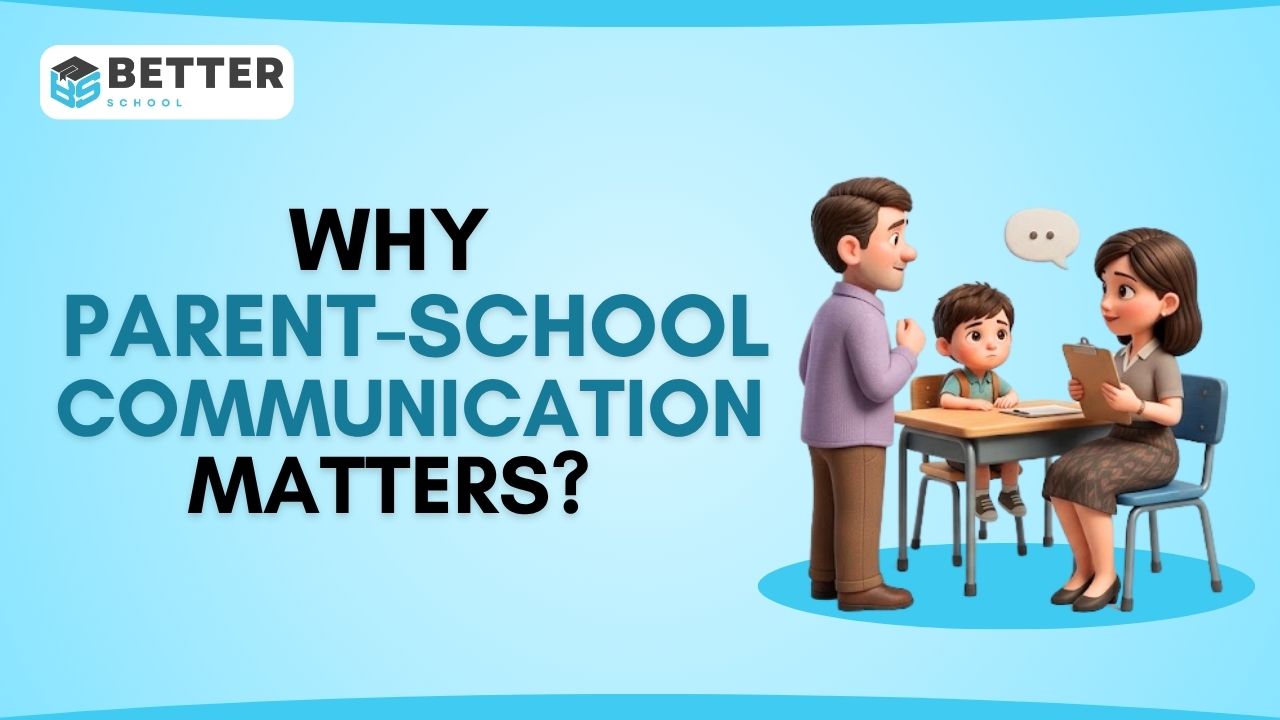
Why Parent-School Communication Matters
Education of a child does not take place solely within the four walls of a classroom.
Teachers educate the students in school whereas the parents support their kids at home. The good communication between both the parties ensures that the children get better support during their educational process.
However, in an environment which is always hectic in school, parent-school communication might get difficult.
The important notices could be ignored. Parents could be unaware of any event which is going to occur in future. Teachers may face problems reaching out to all parents. Small issues regarding the development of students could be overlooked.
This shows the importance of parent-school communication now more than ever.
Parental Need To Get Information Regarding Their Children
Every parent would like to get information regarding his child.
Is he attending classes regularly?
Does he complete his homework on time?
Does he do well in his studies?
Does he take part in various school activities?
Parents must not have to wait till the end of the term for getting the answers to all these questions.
1. Good Communication Enables Parents to Remain Involved
It is not possible for parents to be there in the classroom each day.
Nevertheless, with good communication by the school, they will remain in touch.
Basic information on attendance, homework, tests, events, and educational progress can go a long way in enabling parents to understand what their child is going through at school.
This would make it easy for them to give additional help at home.
2. Early Indication of Small Issues
In some instances, a child might be having problems but without communicating this to their parents.
Some early indicators of this are declining grades, absenteeism, uncompleted homework, or behavioral change within the class.
Through good communication between the teacher and the parent, such small changes will easily be picked up.
Instead of letting the problem escalate, the parent and teacher can discuss the issue and find out what the problem could be.
3. Teachers Get to Know Students Better with Help from Parents
Teachers see their students in classrooms, while parents see their children in another light altogether.
The parent will be aware that there has been a problem at home, or that there have been changes in the routine, which may affect the studies of the child.
These issues will need to be communicated to the teachers, who will then gain insights into the student's life.
In turn, teachers may pass along valuable information to parents about what they have observed in class.
4. Essential Information for Schools Needs to Go to Parents On-Time
There is an abundance of school information that needs to be relayed to parents during the academic year.
It can include:
Exam schedule
Holiday information
School activities
Parent-teacher conferences
Assignment submission dates
Fee due dates
Class activities
Announcements
5. Communication Promotes Trust
Effective communication is not only associated with transmitting messages.
It is also aimed at promoting trust.
When schools provide open communications to parents, parents become more confident about their child's education.
On the other hand, teachers become more supported when parents are engaged.
All this helps to create a better relationship between schools and families.
6. Children Profit from Parent-Teacher Cooperation
For example, a child has difficulties in studying mathematics.
The teacher sees problems in some specific areas.
Parents may see another side of the story – a child tries to avoid doing homework in mathematics at home.
When teacher and parents communicate, it becomes easier to solve the issue.
Child does not have to do everything on his/her own.
This is one of the main advantages of effective communication between parents and schools.
7. Digital Means Are Streamlining School-Parent Communications
Communications between the school and the parents have undergone much change.
In the past, schools mostly relied on printing announcements, diaries, telephone conversations, and direct face-to-face conversations.
These communication forms still remain effective; however, the introduction of digital school management system will allow for better and faster communication.
Information could be delivered through a single central point instead of using different channels of communications.
This will allow parents to monitor information related to the school effectively.
8. Digital Communications Allow for Involvement even when Busy
The lives of modern parents are very hectic.
Work commitments, family obligations, and other day-to-day activities might not allow parents to visit the school often.
Using digital means, it would be possible for the parent to stay in touch without requiring physical presence at the school.
Thus, the parent might review an important message, attendance or academic reports when they find some time.
9. Communications Must Be More Than Notifications
Quality communications must go beyond sending hundreds of notifications.
Parents should be given information that is valuable, clear, and relevant.
For instance, information concerning an important exam must be clear and also searchable.
The aim should not be to increase communications.
The aim should be to improve communication.
10. Privacy and Quality Communications Matter
With the advancement of technology in schools, there must be considerations regarding the privacy of students.
The school must ensure that student data and information is shared only by authorized persons.
Parents must feel that the information concerning their child is well managed.
Quality communications must encompass accessibility and privacy.
What Can Parents Do?
Parents do not have to communicate with teachers on a daily basis.
Sometimes small steps make a big difference.
Parents can:
Monitor school news regularly
Visit parent-teacher meetings if possible
Ask questions when things are not clear
Tell teachers about important issues
Help children talk about their experiences at school
Answer important news from schools
The simplest involvement may show the importance of the education for children.
What Can Schools Do?
Schools can also help parents with communication.
They can:
Convey important information
Provide timely news
Inform parents about student’s development
Organize the process of communication
Create opportunities for parents to ask questions
Ensure confidentiality of students’ and families’ information
Consistent communication will tell parents what to expect and will help teachers work with families more efficiently.
Better Collaboration
Effective educational process is possible only when both schools and parents strive for the same goal.
The first side has experience in teaching the class.
The second side understands its child.
And children will profit from cooperation and exchange of information between these parties.
Therefore, parent-school collaboration should not be reduced to an administrative process.
It can be a collaboration which will affect a child's educational process and even his/her psychological condition.
Conclusion
Message from a school may take only several seconds to be read.
Talk between a parent and a teacher may take only several minutes.
But these moments of communication are important enough to affect the child's education.
Schools don't have to conduct communication just because it should be done.
What they need to do is develop the communication process that will allow reaching necessary people with necessary information.
Because when schools and parents are in touch, children get help both at school and at home.